
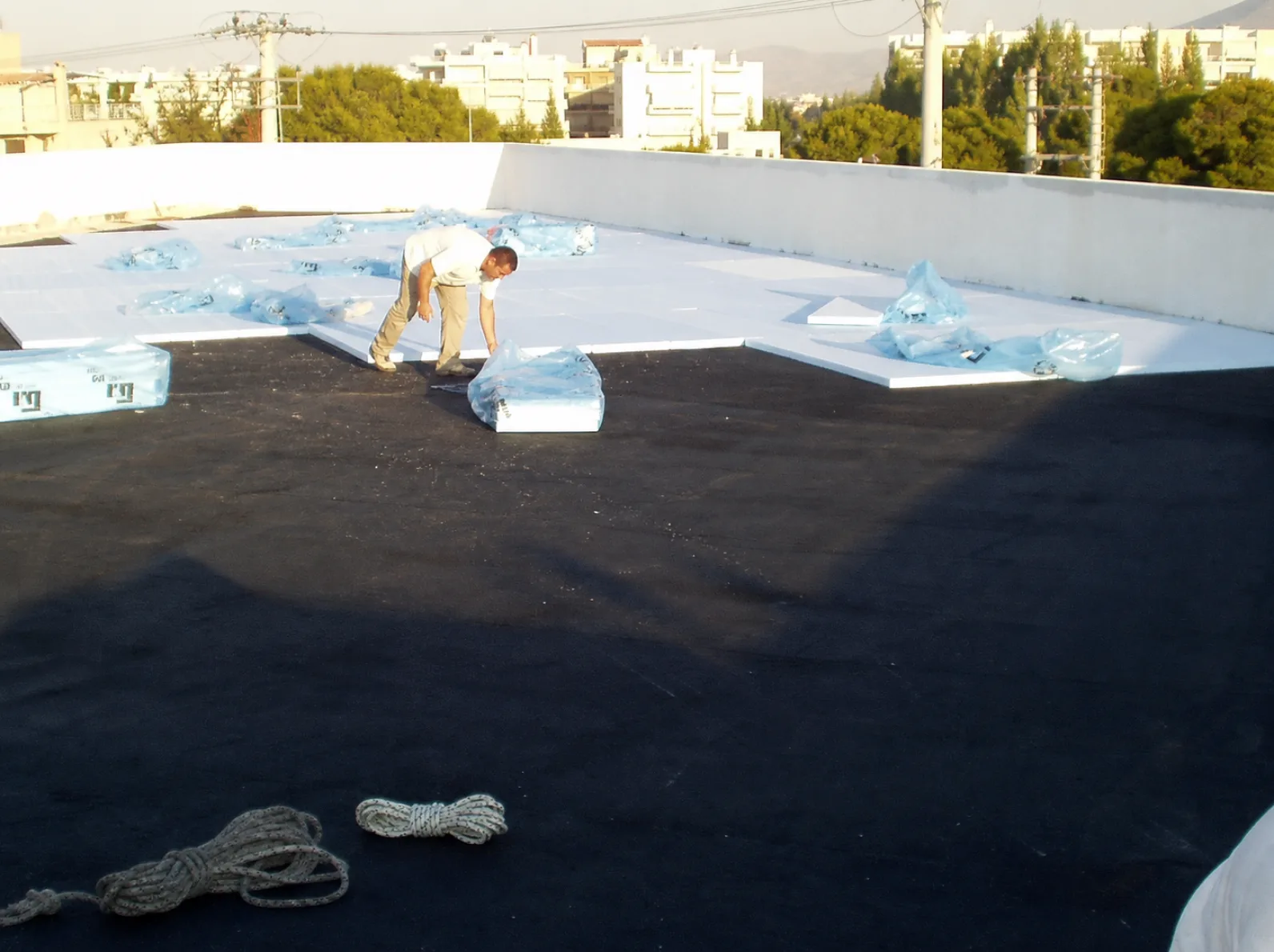
Conventional roof
Conventional roof thermal insulation with final waterproofing layer
In a conventional roof build-up the waterproofing protects the final surface, while vapor control, thermal insulation and slopes are organized below for proper drainage.
Problem
The roof needs thermal performance and a watertight final layer
Older roofs often have poor slopes, aged layers and high thermal load. A conventional solution organizes the build-up so insulation and waterproofing work together.
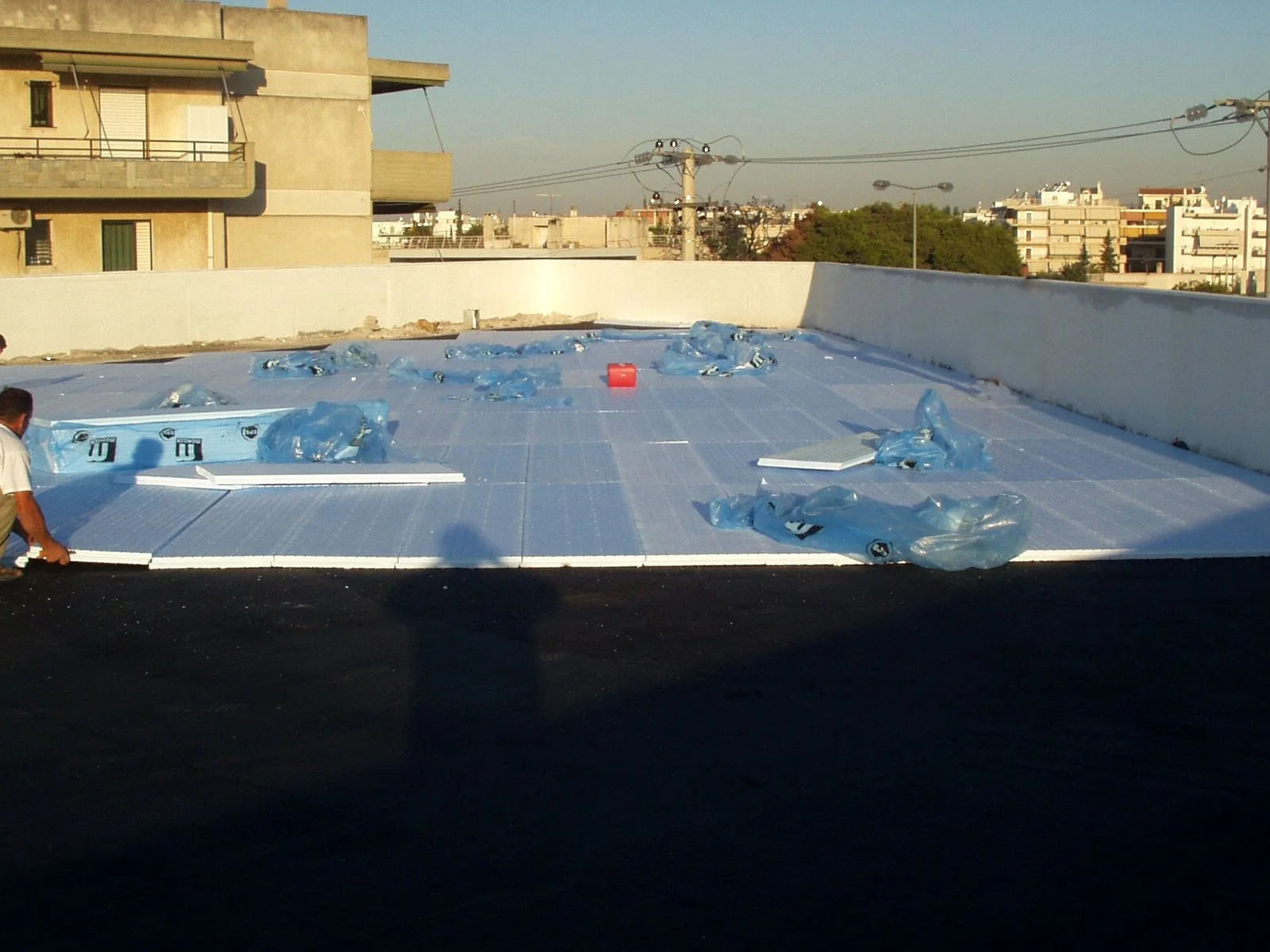
Where it is usedResidential roofsFor lower thermal load and water protection. Professional roofsFor clear work sequence, schedule and controlled final result. RenovationsWhen a new layer sequence is needed over an existing substrate.
New and existing roofs with exposed final waterproofing
The system is selected when the final waterproofing layer remains accessible for inspection and maintenance.
SystemEnergy improvementReduces thermal stress from the roof in winter and summer. Controlled drainageSlopes and drains are corrected before final waterproofing. Accessible waterproofingThe final layer can be inspected and maintained directly.
Vapor barrier, insulation, slopes and final waterproofing
The build-up is designed after assessment. Vapor barrier, insulation, foam concrete or other slope formation, protective layers and final waterproofing with suitable membrane or coating are typically evaluated.
Process
Layer sequence without weak details
In a conventional roof, success depends on the substrate, slopes and final waterproofing.
- Roof checkExisting layers, moisture, slopes, drains and technical constraints are recorded.
- Build-up designVapor control, insulation, slopes and final waterproofing system are defined.
- ApplicationEach layer is applied in the correct order with overlaps and details.
- DeliveryFinal checks are completed and inspection and maintenance guidance is provided.
FAQ
Conventional roof insulation FAQ
The final proposal follows an assessment of the existing build-up and roof use.
Is a vapor barrier always needed?
The need depends on space use, layers and condensation risk. It is evaluated in the technical proposal.
Which waterproofing is used as the final layer?
Bituminous membrane, synthetic membrane or liquid-applied system may be selected according to substrate, use and requirements.
Next step
Need roof insulation and waterproofing?
Send roof details, existing layers and water issues. Ergomonosi will propose the correct work sequence.