
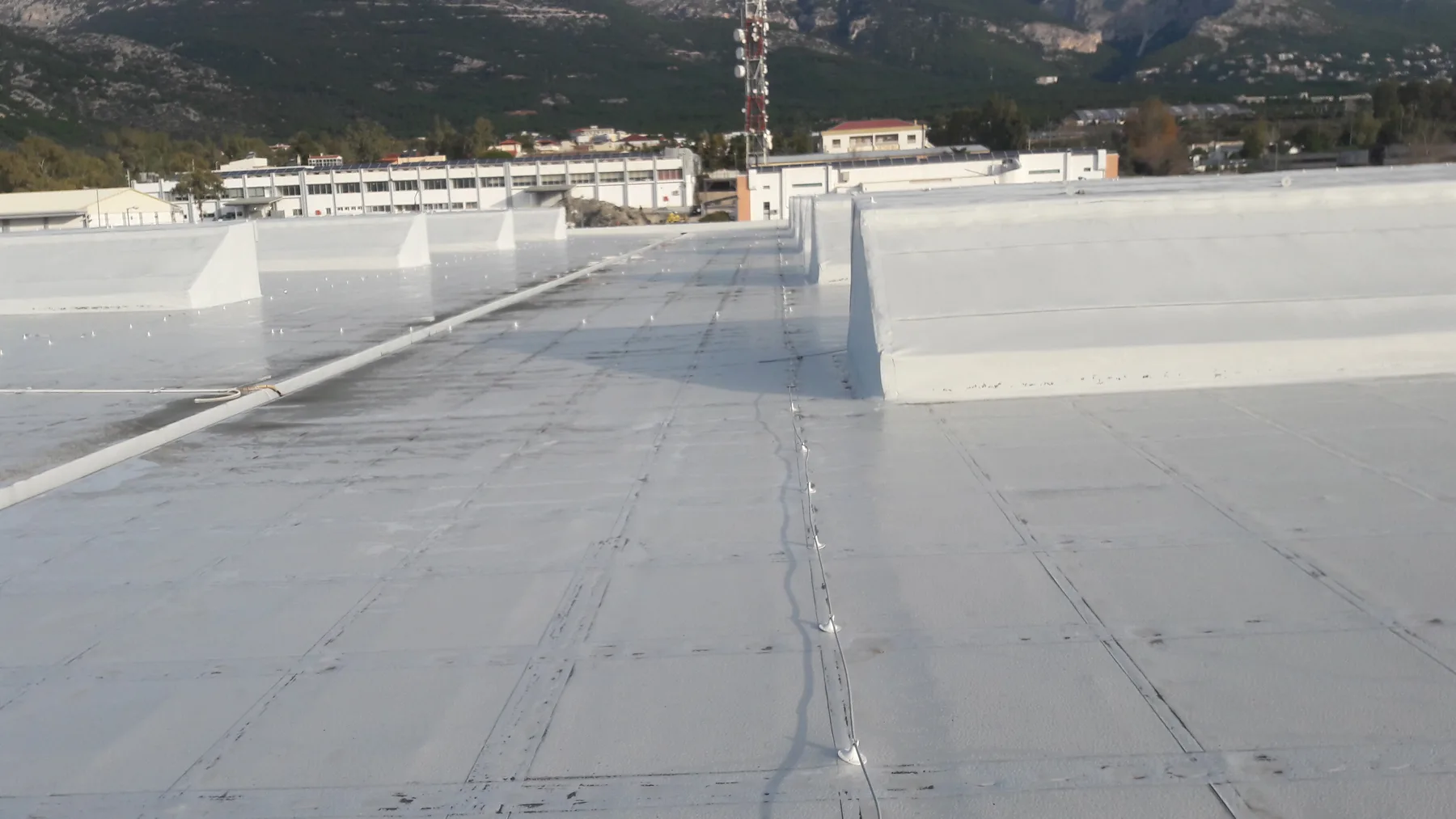
Waterproofing
Waterproofing with PVC and TPO membranes
PVC/TPO synthetic membranes provide solutions for demanding roofs and support various installation methods for waterproofing systems on roofs, tanks, channels, containment basins and similar applications.
Context
TPO / PVC waterproofing membranes, thermoplastic polyolefin thickness
Membrane watertightness is tested by applying air pressure to every channel between the parallel seams. One hundred per cent of the seams are checked by air test. The membrane is installed and welded with a double seam and a diagnostic test channel, in accordance with the applicable membrane-welding legislation and technical specifications. At the terminations of the existing membrane, the perimeter zones are completed by mechanically fastening the termination bar with special self-drilling stainless-steel anchors of a suitable head, at an overall fixing density of 6–7 pieces per linear metre. Finally, the termination is sealed with a polyurethane sealant such as SIKAFLEX 11-FC by the Swiss manufacturer SIKA.
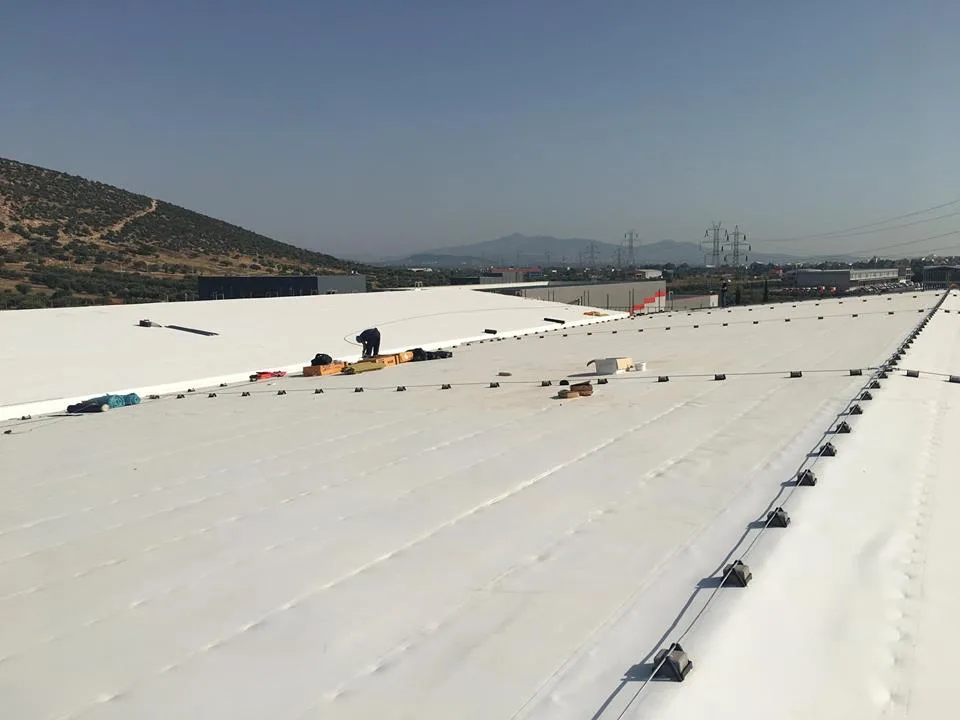
Where it is usedRoofs and terracesFor exposed surfaces that require long-term resistance. Details and penetrationsAround parapets, drains, pipes and difficult geometry. Private and technical projectsWith crew organization, schedule and clearly defined scope.
Surfaces and uses
The final choice is made after checking substrate, slopes, drains, existing layers and future use. The membranes are installed using automatic hot-air welding machines manufactured by the established Swiss company Leister. Welding is completed in a single pass, creating a double seam through surface melting of the TPO, PVC or equivalent membrane. Membrane watertightness is tested by applying air pressure to every channel between the parallel seams. One hundred per cent of the seams are checked by air test.
SystemWaterproof continuityJoints, upturns and drains are treated as critical points. CompatibilityThe system matches substrate, exposure and intended use. Long-term protectionCorrect application reduces future repairs and moisture damage.
Materials, details and application control
The system is designed with mechanical fastening or adhesion, heat-welded seams, special pieces and detail checks.
Process
Application follows sequence and control
Each page describes a different material, but Ergomonosi follows the same logic: inspection, preparation, correct application and delivery.
- AssessmentMoisture, slopes, drains, old layers and constraints are checked.
- ProposalMaterial, preparation, cost, schedule and guarantee are defined.
- ApplicationThe crew follows the correct sequence of layers and details.
- DeliveryFinal checks are completed and maintenance guidance is provided.
FAQ
FAQ
The answers are indicative. The final solution is confirmed after an assessment.
Is this suitable for every roof?
Not always. Substrate, existing layers, slopes, use and budget determine whether it is the right choice.
Is maintenance needed after application?
Every waterproofing system benefits from periodic checks of drains, details and possible mechanical damage.